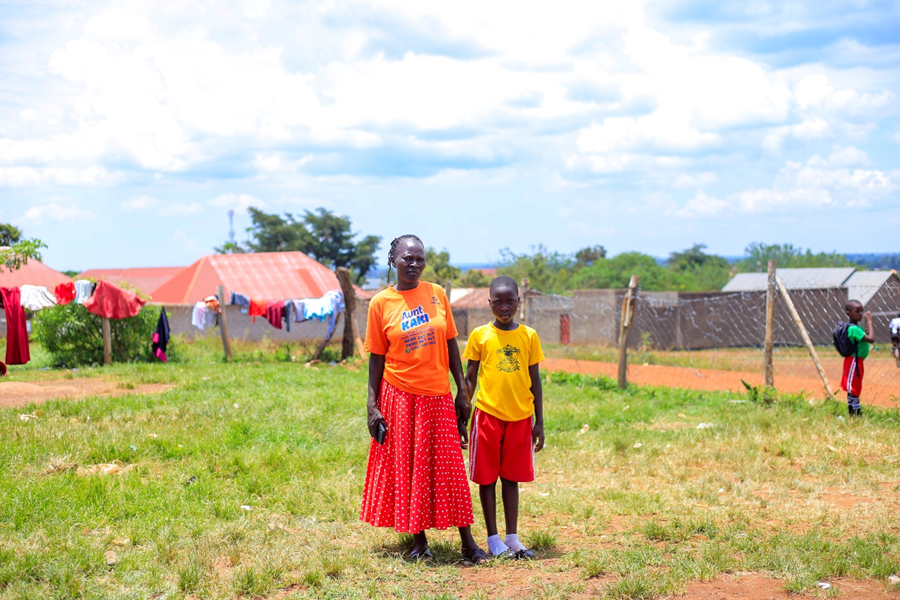
Displaced from her home and land by climate-induced food shortages, GBV, and disability stigma, one mother in Uganda is rebuilding from nothing, carrying losses that money cannot measure.
In a house she rents at the Naluwelele Trading Center in Bugiri district, Isamait Harriet, a mother of five, starts every day with the same calculation: how much food can she afford today? How much will be left over for school fees, medicine, and rent? It doesn’t matter whether the month has been good.
A few years ago, none of that would have troubled her at all. Harriet had land, a garden, and neighbors who knew her name. Now she has none of that. She brings up her children all on her own (including a child with a disability) and buys almost everything she used to grow.
When the harvest began to fail
Farming was never work to Harriet. It was her skill, her routine, and her security. She knew the seasons, and she knew her garden would feed her children.
That trust eroded as the rains became increasingly unreliable and the harvests dwindled (as they have for so many rural families across Uganda). Food that had once come without a second thought had to be rationed.
But Harriet’s problems started back in 2011 with the birth of her first child, who has a disability.
I noticed my husband started to change when I had our first child, who was born with a mental disability. He said that in their clan, they don’t have children with disabilities.” Harriet recalls.
In their polygamous home, the husband’s rejection became neglect. As the land grew less fertile due to overuse and desertification, Harriet’s harvests declined, leaving only a little food for the family. Her husband’s treatment turned into stopping Harriet from accessing the land they had purchased together years ago.
Then he began taking the little food from her garden for his second family. When Harriet protested, her husband abused her both verbally and physically. As food grew scarcer, the little that remained didn’t go to the woman and child who needed it most. In the end, Harriet was evicted from the house and the land she’d worked for so many years.
Justice on Paper
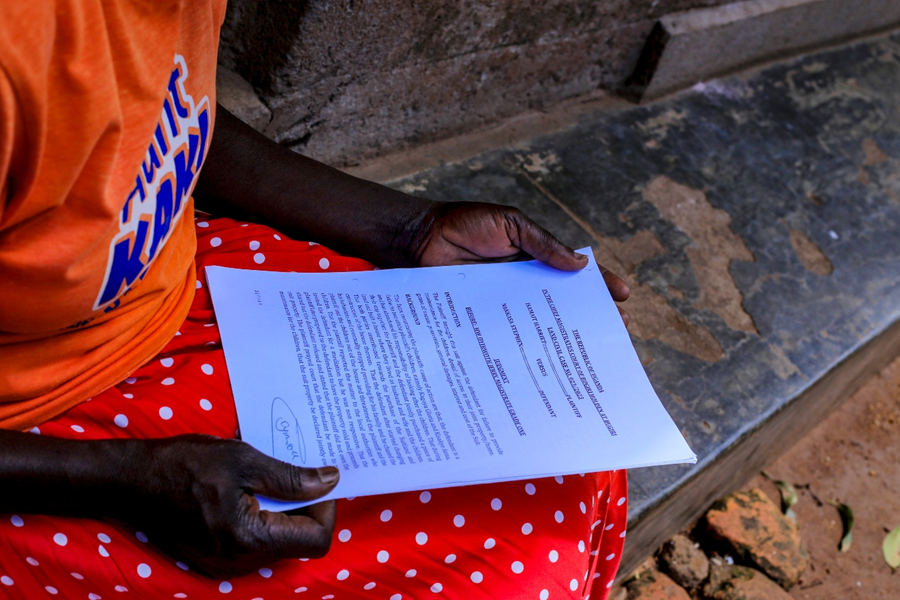
Harriet didn’t stay silent. She reported the abuse and neglect to the village chairperson, who in turn referred it to the appropriate authorities. With IDIWA’s support, she took it to court.
The court ruled in her favour. The court ordered her husband to pay UGX 70,000 per month for maintenance and his children’s school fees.
He has done neither. The order intended to protect Harriet and her kids is now just a piece of paper.
“Even after the court ordered him to pay child support and school fees, he’s still refused. I’m still afraid to go home. I’m afraid he’ll attack me again.” Says Harriet
Despite receiving a court order instructing her husband to pay child support and fees, Harriet still lives in fear, and the husband has yet to follow the order.
The cost of starting again
Harriet is learning how costly it is to own nothing. She pays rent. She buys the food that she used to grow. She also pays for her kids’ medical needs and school fees (education is the only thing that can really secure their future). Every cost falls on one woman who is also the one who provides the day-to-day care for her child with a disability.
“I’ve been renting here for three years. I don’t have any land as I did in my home. I buy my food every day, on top of rent and school fees, and I get absolutely no support from my husband,” she says.
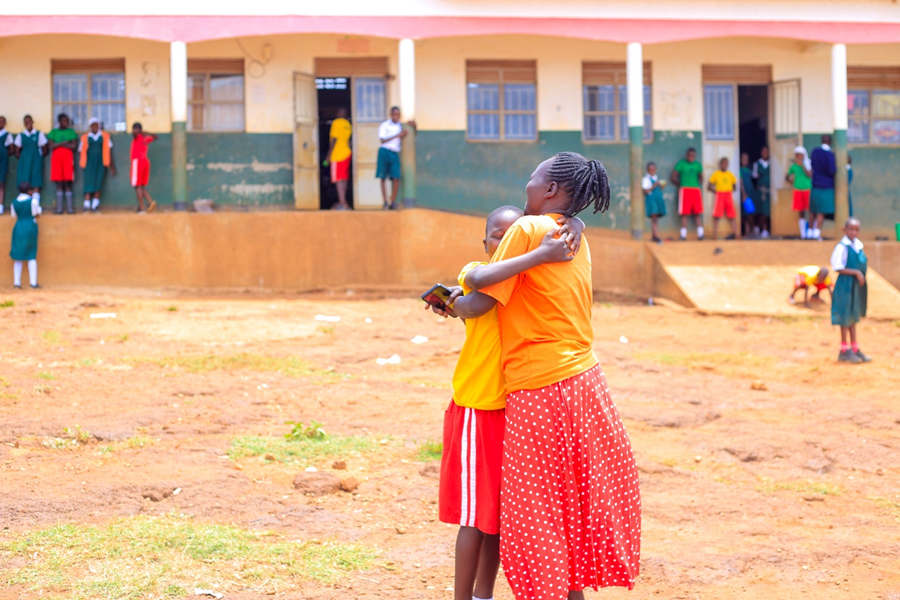
Ismait Harriet embraces her daughter at the school. While settling into her new community after displacement, Ismait is gradually adjusting while carrying the weight of motherhood and the responsibility of paying for food and managing school fees in the new community.
The money Harriet has lost is easily quantifiable: the harvest, the plot, and the monthly allowance that never materializes. The more significant losses are not recorded in any ledger.
She’s lost her land, and with it, the pride and independence of feeding her own family. She’s also lost her community, the neighbors who would have shared a meal or looked after her child for an hour. For a mother of a child with a disability, that kind of support is not a luxury; it’s how you get through the day.
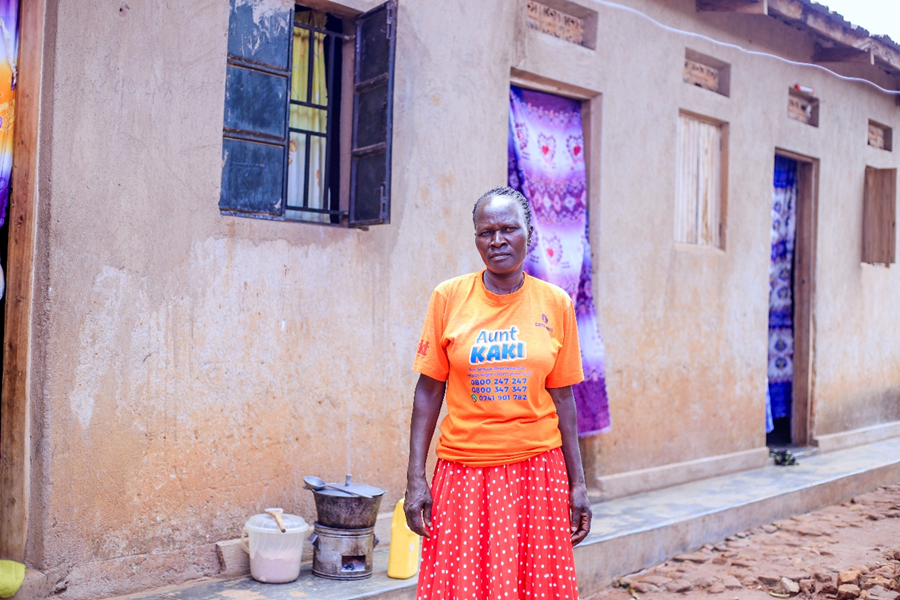
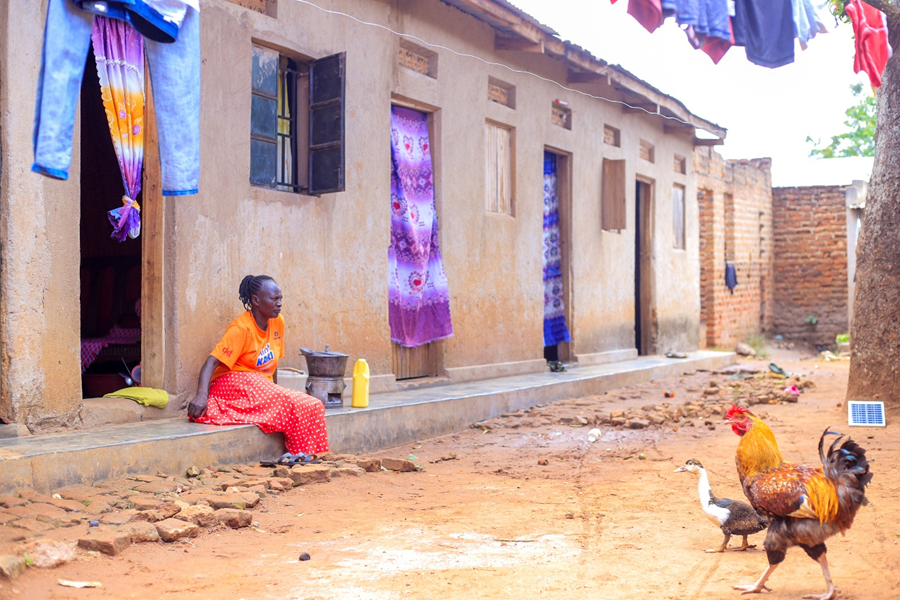
Harriet in her new surroundings, where she has to rent, while facing the burden of buying food daily because she has no land in the area to grow food
She’s lost the feeling of home. She’s starting over among strangers, with no time to make friends, as every day is spent hunting for the next payment. She carries the weight of it all: the uncertainty, the sheer exhaustion, and the fear for her kids if she can’t keep going.
Women and people with disabilities are frequently the first to be affected by climate change and the last to be heard when it comes to decisions about climate change. When those two realities coincide in one person, the burden is even greater, and the losses are much more likely to go unrecorded.
In a rented house in Naluwerere, Harriet’s battle goes on. For her, and for many women like her, rebuilding can begin only when others finally see the losses they carry.
Ismait Harriet with one of her children. Together, they are facing the impacts of displacement and coping with life in the new community.